
All Services
Energy Management System (EMS), in Industry- optimize the power/energy against unnecessary uses maintaining energy benchmarking, evaluation of "Buildings Power Consumption" and compare energy efficiency.
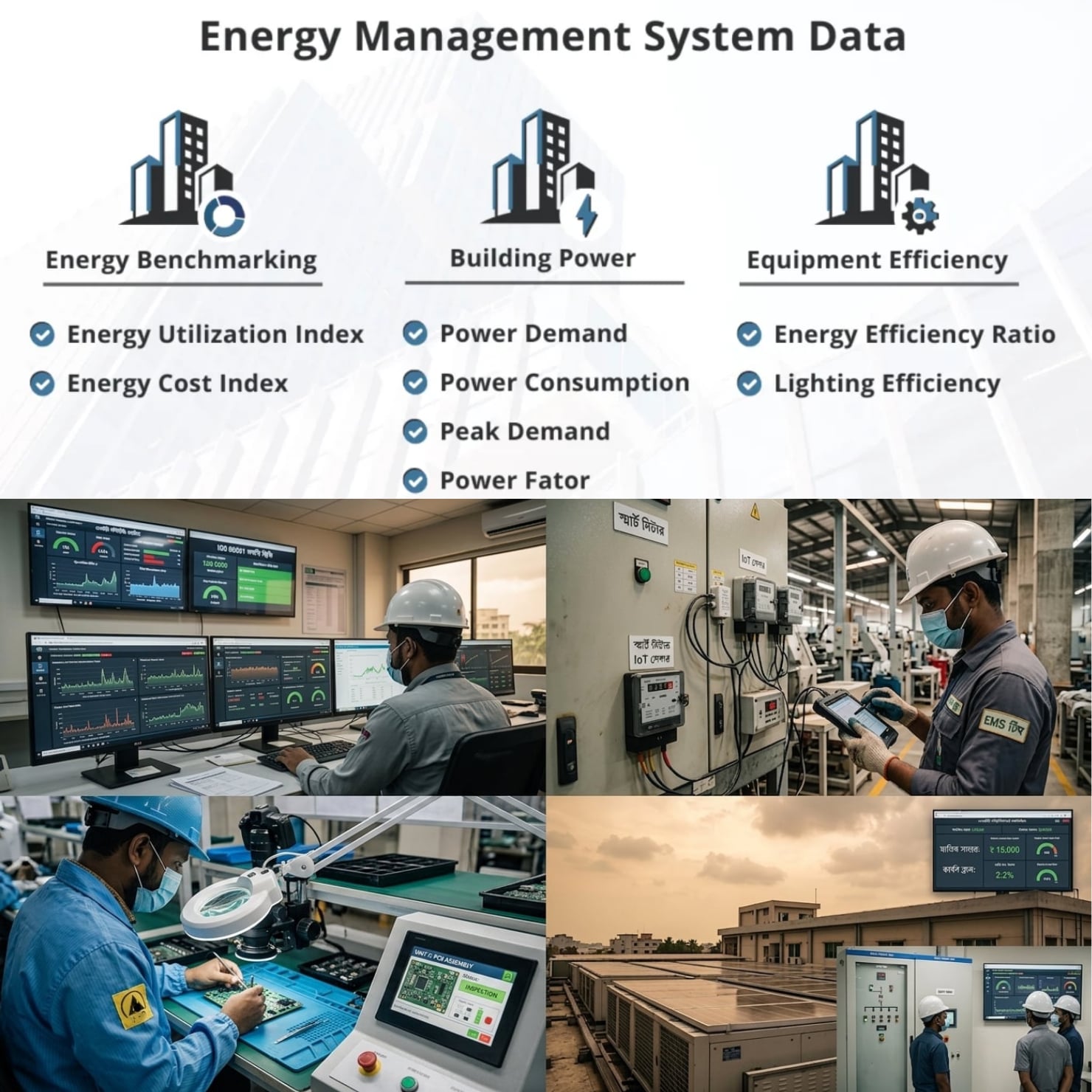
Energy Management System (EMS)
Energy Management System (EMS)
A proactive, technology-driven framework of software and hardware designed to monitor, analyze, and optimize energy consumption within manufacturing and industrial facilities
In Industry, Energy Management System (EMS), - optimize the power/energy against unnecessary uses maintaining energy benchmarking, evaluation of buildings Power Consumption and compare energy efficiency.
It helps reduce energy costs, decrease carbon emissions, and increase operational efficiency without disrupting production.
Key aspects of an EMS include:
Real-time Monitoring & Analysis: Tracks energy usage across machines and processes to identify inefficiencies and waste.
Operational Optimization: Implements strategies like adjusting HVAC, controlling production schedules, and balancing renewable energy sources.
Sustainability Goal Tracking: Helps companies adhere to environmental standards and comply with regulations like ISO 50001.
How It Works:
An EMS utilizes IoT devices and meters to collect data, which is analyzed to create actionable insights, such as forecasting future energy needs or identifying peak power usage.
Key Benefits:
Cost Reduction: By monitoring and managing energy consumption, industries can significantly lower their energy bills.
Sustainability & Compliance: Assists in reducing carbon footprints and complying with international energy management guidelines.
Improved Efficiency: Optimizes energy distribution and usage.Actionable Data: Provides insights that help in decision-making and developing strategies for future improvements.