
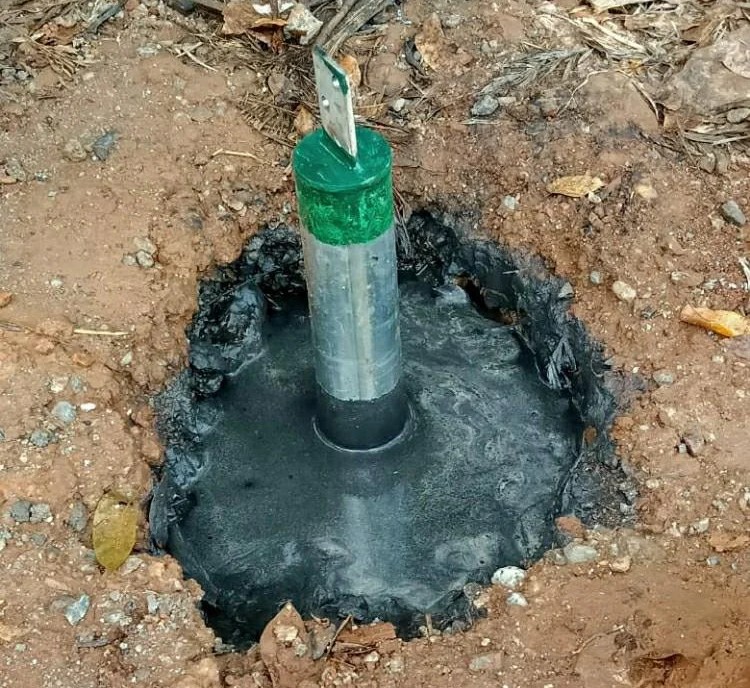
Earthing Boring
Earthing Boring – 40 feet long (Boring Job only)
GI Pipe 1.5" Diameters
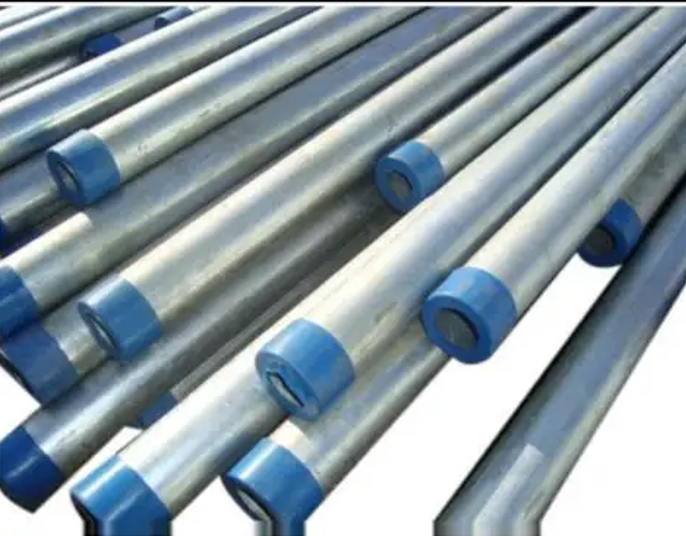
Key Applications in LPS
Mechanical Protection: Used as a guard pipe for down conductors (like copper strips or aluminum cables) to protect them from physical damage and theft at ground level (typically covering the first 2.5 to 3 meters from the base).
Earth Electrodes: Often utilized in pipe earthing systems where the GI pipe serves as the primary electrode driven into the soil.
Support Masts: Acts as a sturdy mounting pole for air terminals (lightning rods) on rooftops.
To ensure compliance with standards like IEC 62305 or BNBC, the following specifications are generally required:
| Feature | Specification |
| Material | Low Carbon Steel / Mild Steel |
| Galvanization | Hot-dip galvanized (Min. 460 $g/m^2$ or ~65-70 microns) |
| Pipe Class | Usually Class B (Medium) or Class C (Heavy) |
| Outer Diameter | Approximately 48.3 mm |
| Wall Thickness | ~3.25 mm (Medium) to 4.0 mm (Heavy) |
| Corrosion Resistance | High (suitable for underground or outdoor exposure) |
Hot-Dip Galvanization: Ensure the pipe is hot-dip galvanized rather than electro-galvanized. Hot dip provides a much thicker zinc coating essential for the 20+ year lifespan required for LPS components.
Continuity: If the pipe is being used as a functional part of the earthing system, all joints should be threaded and treated with anti-corrosive conductive paste or welded and then painted with zinc-rich cold galvanizing spray.
Perforation (for Earthing): If used as an earth electrode, the lower section of the pipe is often tapered and perforated (drilled with small holes) to allow moisture and salt/charcoal treatment to maintain low soil resistivity.
Bending: Avoid sharp bends that could stress the galvanization layer, as micro-cracks can lead to premature rusting.
While 1" or 1.25" pipes are sometimes used, the 1.5" diameter is preferred for industrial applications because it offers a higher surface area for current dissipation in the soil and greater "wind load" resistance when used as a mast for air terminals.
Earthing Boring – 40 feet long (Boring Job only)